Strategy
Real Estate Social Media Marketing That Actually Generates Leads
Published 2026-08-21 · By Launch & Found
A practical guide to real estate social media marketing for agents and teams, covering platforms, content, and what actually drives leads.
Real estate social media marketing works when it does three specific things: it shows your listings and expertise to people who already live or want to live in your area, it gives them a reason to remember your name before they need an agent, and it routes interested people toward a phone call, a form, or a saved contact. Posting without those three things happening is just activity. Most agents who feel like social media "isn't working" have the posting part figured out and are missing the routing part.
In this article
- What Is Real Estate Social Media Marketing, Really?
- Which Social Platforms Are Worth an Agent's Time?
- What Should You Actually Post?
- How Much Time Does This Take Each Week?
- How Does Social Media Fit With Your Website and Leads?
- Where Should You Go From Here?
- Key takeaways
- FAQ
What Is Real Estate Social Media Marketing, Really?
Real estate social media marketing is the ongoing use of platforms like Instagram, Facebook, and increasingly TikTok and YouTube to build visibility as an agent in a specific market, generate warm contacts, and support the trust that turns a stranger into a client. It sits alongside, not instead of, the other basics: a website that loads fast and converts, a Google Business Profile that shows up when people search "realtor near me," and a way to follow up with everyone who raises a hand.
The mistake many agents make is treating social media as the whole marketing plan. It is one channel. It is good at building familiarity over time and showing personality and local knowledge. It is weak at capturing someone the moment they decide to sell, because that decision usually happens through search, referral, or a sign on a lawn, not a scroll through a feed.
A former brokerage marketing director once put it plainly: "Social media builds the shortlist. Search and referral get you the call. Miss either one and the other does less work than it should."
That framing matters because it changes what you measure. Followers and likes are a proxy for familiarity, not a proxy for revenue. The agents who do well treat their profiles as a slow-build trust asset and rely on their Local SEO and website to catch the person who is ready to act right now.
Which Social Platforms Are Worth an Agent's Time?
Not every platform deserves equal effort, and spreading yourself across five of them thinly usually produces worse results than doing two well. The right mix depends on your market, your listing price point, and how much video you're willing to make.
| Platform | Best for | Time cost | Realistic outcome |
|---|---|---|---|
| Listing photos, local lifestyle content, Reels | 3–5 hours a week | Steady brand recognition, some direct DMs from buyers | |
| Local community groups, older buyer demographics, event promotion | 2–3 hours a week | Referrals and shares within existing networks | |
| TikTok | Neighbourhood tours, market commentary, first-time buyer education | 4–6 hours a week (mostly filming) | Reach beyond your existing sphere, slower to convert |
| Investor and commercial-adjacent clients, referral partners | 1–2 hours a week | Fewer leads, higher quality when they come | |
| YouTube | Long-form neighbourhood guides, buyer/seller FAQs | 5+ hours a week (editing) | Strong long-term search traffic, slow to build |
Pro tip: pick one platform to be genuinely good at before adding a second. An agent posting three strong Instagram Reels a week for 90 days will usually outperform one spreading five weak posts across three platforms in the same period.
If your market skews toward younger first-time buyers, weight your time toward Instagram and TikTok. If your listings are higher-end or your referral network is your main source of business, LinkedIn and Facebook groups tend to earn their time back faster.
What Should You Actually Post?
Content falls into three useful buckets, and most agents post far too much of one and not enough of the other two.
The first bucket is listings: new-to-market announcements, open house reminders, sold posts. This is necessary but it is the least persuasive content type, because it only speaks to people actively shopping right now.
The second bucket is proof: client testimonials, before-and-after staging, closing day photos, quick numbers on how a negotiation went. This builds credibility with people who are not ready yet but are watching.
The third bucket is education: how a bidding war actually works locally, what closing costs look like, how much a specific renovation adds to resale value in your market. This is what gets shared and what builds the "she knows this market" reputation that turns into referrals months later.
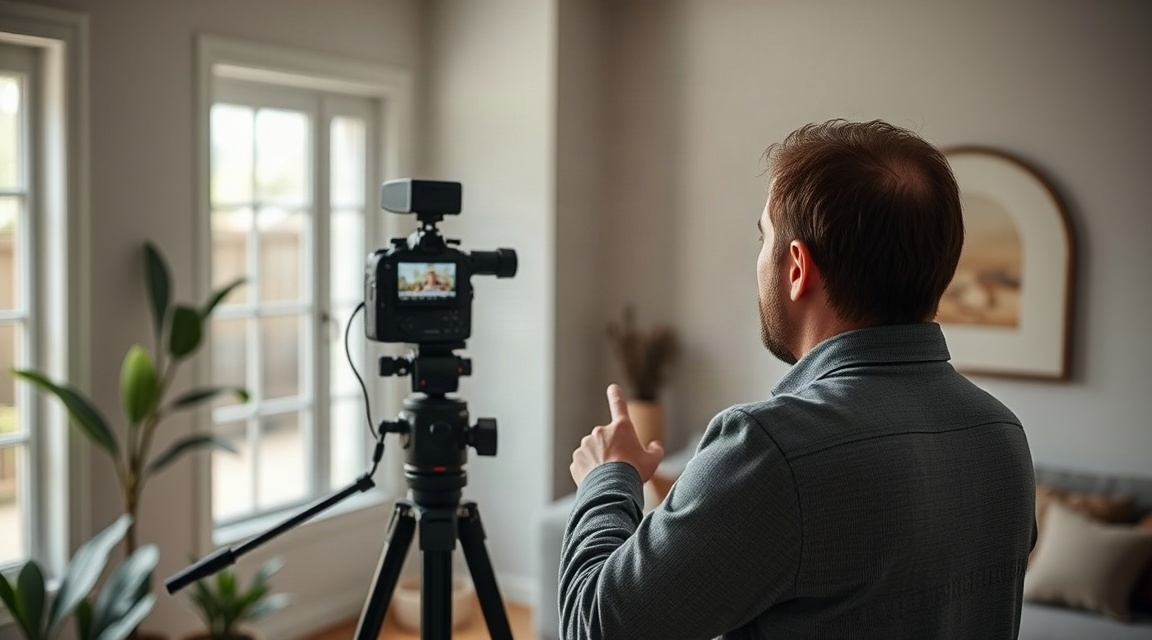 A real estate agent filming a short video walkthrough of a listing for social media
A simple weekly rhythm that works for many agents: two educational posts, one proof post, one to two listing posts, spread across the week rather than clustered on one day. Consistency over 8 to 12 weeks matters more than any single viral post.
Pro tip: repurpose one long piece of content into five short ones. A five-minute neighbourhood walkthrough filmed once can become a Reel, three Stories, a Facebook post, and a paragraph in your monthly email. Filming once and cutting five times is a far better use of an agent's limited time than filming five separate short clips from scratch.
How Much Time Does This Take Each Week?
Realistically, a solo agent who wants social media to contribute meaningfully to their pipeline should plan for 5 to 8 hours a week, including filming, editing, captions, and responding to comments and messages. Teams with a dedicated marketing coordinator can push output higher, but the time cost per post does not disappear, it just moves to someone else's calendar.
The biggest time drain is usually not posting itself but decision fatigue: what to post, when, and how to caption it. A simple content calendar planned monthly, even a basic spreadsheet with dates and topics, removes most of that friction and tends to double how consistently agents actually post.
Batching helps more than any other single habit. Filming four or five short videos in one afternoon and scheduling them out over two weeks produces better and more consistent content than trying to create something new every single day.
How Does Social Media Fit With Your Website and Leads?
This is the part most agents skip, and it is the part that determines whether social media produces business or just impressions.
Every profile should have a clear, findable path to your website, and that website needs to do something useful once someone arrives, whether that is booking a call, browsing listings, or requesting a home valuation. A profile with no working link, a slow website, or no way to capture a visitor's contact information wastes most of the attention social media generates.
This is also where a Google Business Profile matters more than agents expect. Someone who sees you on Instagram will often check Google before calling, reading reviews and confirming you're a real, active local agent. If that profile is thin or outdated, the trust built on social media leaks away right at the point of decision.
The Found System exists for exactly this handoff: a website built to convert, a Google Business Profile kept current, a review engine that keeps testimonials flowing, and lead tracking so you can see which channel, including social media, is actually producing calls rather than just clicks. Pairing consistent posting with a page built specifically for real estate lead capture is what closes the gap between visibility and business.
For agents comparing legitimate advertising practices, it's worth checking guidance from a recognised body rather than relying on trends alone. The Canadian Real Estate Association publishes standards and resources relevant to how listings and agent services can be represented publicly, which is a useful baseline before any paid promotion of a listing goes out.
Where Should You Go From Here?
If you've read this far because you're deciding how to spend your limited marketing time and budget as an agent or team, the next practical step is usually not "post more." It's making sure the parts social media depends on, your website, your Google presence, and your lead follow-up, are solid enough that the attention you're already earning doesn't leak away. The Marketing for Realtors and Real Estate Teams page walks through how those pieces fit together specifically for real estate, including what a working setup looks like month to month and what it costs. It's a reasonable place to look before committing more hours to filming and posting.
Key takeaways
| Point | Why it matters |
|---|---|
| Social media builds familiarity, not urgency | People rarely decide to sell mid-scroll; search and referral catch that moment instead |
| Pick one or two platforms and commit | Thin effort across five platforms underperforms focused effort on two |
| Post education and proof, not just listings | Listings only reach active shoppers; education and proof build long-term reputation |
| Budget 5 to 8 hours a week realistically | Underestimating time is the most common reason agents quit posting after a few weeks |
| Fix the landing spot before scaling output | A slow website or thin Google profile wastes the trust social media builds |
FAQ
How often should a real estate agent post on social media? Three to five times a week on a primary platform is a realistic, sustainable pace for most solo agents. Consistency over several months matters more than daily posting that burns out after three weeks.
Does social media actually generate real estate leads, or just brand awareness? Both, but the mix depends on how well the profile connects to a working website and follow-up process. On its own, social media mostly builds familiarity; paired with a fast website and a review-backed Google Business Profile, it converts into calls and form fills more reliably.
Should a new agent start with paid social ads or organic posting? Organic first, for at least 60 to 90 days, to learn what content resonates locally and to build a baseline of proof content like testimonials and past sales. Paid ads work better once there's existing content to promote rather than starting from zero.
Want the phone to actually ring?
That is the whole job. See how we do it, or tell us about your business.