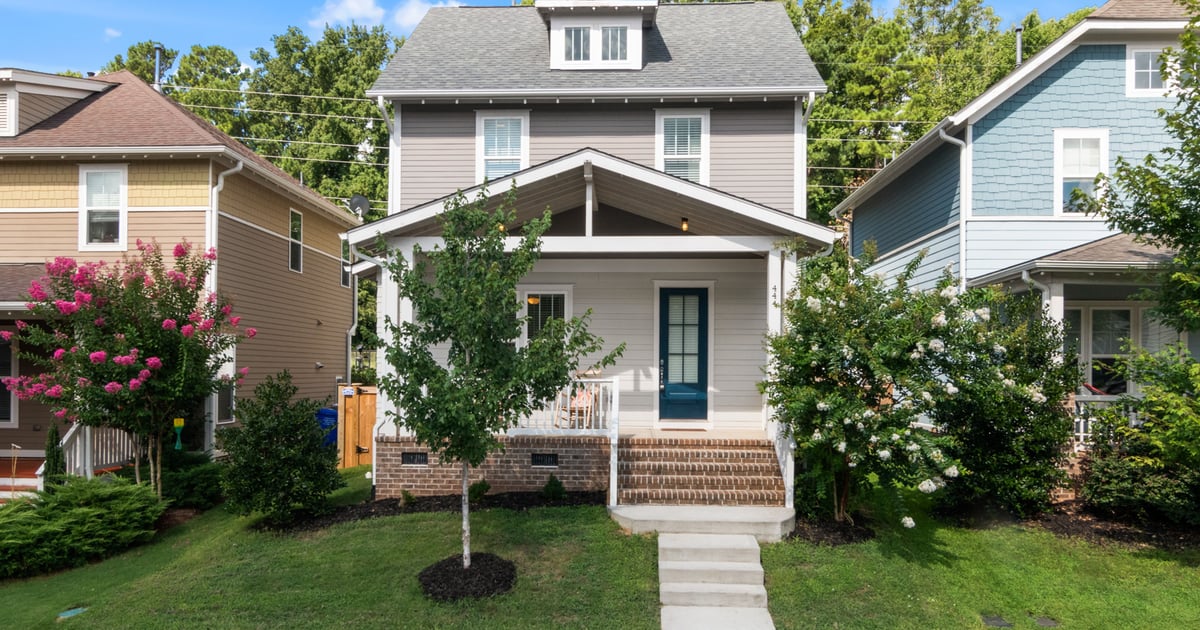
An IDX website for realtors is a real estate website built under the agent's own name and brand that pulls live listing data from the local MLS through an IDX (Internet Data Exchange) feed, so visitors can search active listings without ever leaving the agent's site. It differs from a portal profile or a franchise template because the agent owns the site, the visitor data, and the design, and can pair the search tool with a home valuation page and paid ad campaigns to build a steady flow of buyer and seller leads rather than depending on referrals or bought leads.
- What does IDX actually mean?
- What makes a good IDX website for realtors?
- How does an IDX feed get onto a realtor's website?
- IDX website vs portal profile: which generates more leads?
- What should a realtor look for before choosing an IDX provider?
- How does an IDX website fit into a full lead generation system?
What does IDX actually mean?
IDX stands for Internet Data Exchange. It is the arrangement, set by local real estate boards and MLS systems, that allows a licensed agent to display active listing data from the shared MLS database on their own website, as long as they follow the board's rules on attribution, updates and data use.
Before IDX existed, listing data mostly lived in one place: the MLS itself, accessible to agents, and later to the public through portals. IDX changed that by letting individual agents license a feed of that same data and show it on a site they control. The technical standard behind most modern feeds is maintained by the Real Estate Standards Organization, which sets the data formats that MLS systems and website providers use so listings display consistently no matter which company built the site.
For a realtor, this matters because it means the search tool on their own website is not a mockup or a stale export. It is connected to the same data buyers see on the big portals, updated on a schedule set by the local board, often every 15 to 60 minutes depending on the market.
Data licensing agreements exist to protect the integrity of MLS listings, not to make marketing harder for agents who follow the rules.
The practical result is that a realtor can offer a genuine home search experience on a site that carries their name, their branding and their contact information, instead of sending every visitor to a portal where competing agents' ads sit next to the same listings.
What makes a good IDX website for realtors?
Having an IDX feed is the baseline, not the whole answer. Plenty of sites have a working search box and still generate almost no leads because the rest of the site is not built to capture and convert visitors.
A site that actually works for lead generation tends to share a few traits:
- The search results load fast and work properly on a phone, since most visitors will be on mobile.
- There is a clear, low-friction way for a buyer to save searches and get alerted to new listings, which is what turns a browser into a lead.
- There is a separate path for sellers, usually a home valuation tool, since buyers and sellers have different questions and need different next steps.
- The design reflects the agent or team's own brand, not a generic template shared with hundreds of other agents in the same franchise.
- Forms are short and the follow-up is immediate, because a lead that sits for 24 hours is a lead that has probably already messaged three other agents.
Pro tip: test your own site's IDX search from a phone on cellular data, not office wifi. A lot of IDX widgets that look fine on a fast desktop connection are slow enough on mobile data that a visitor gives up before the results even load.
For a deeper look at what separates a site that generates leads from one that just looks nice, see realtor website design.
How does an IDX feed get onto a realtor's website?
The process is fairly standard across Canadian boards, though the exact paperwork varies by market.
- The agent confirms they hold an active MLS membership in good standing with their local board.
- The agent or their website provider signs an IDX or VOW (Virtual Office Website) data licence agreement with the board, agreeing to display listings under the board's rules, such as showing the listing brokerage and update timestamp.
- The board or its data provider issues API credentials or a feed connection.
- The website provider connects that feed to the search tool on the agent's site, mapping fields like price, square footage and photos so they display correctly.
- The board typically reviews the live site to confirm it meets display rules before or shortly after launch.
This last step catches most agents off guard the first time. Boards are protective of how their data is presented, since a poorly labelled feed can confuse consumers about who represents a listing. A provider that has done this before will know the specific requirements for that agent's board and avoid a rejected application that delays launch by a few weeks.
Realtors working with brokerages that already have an established IDX relationship sometimes have an easier path, since some of the paperwork is handled at the brokerage level. It is worth checking with a managing broker before assuming a new agreement is needed.
IDX website vs portal profile: which generates more leads?
Both have a role, but they are not interchangeable, and treating a portal profile as a replacement for an owned website is one of the more common mistakes newer agents make.
| Approach | Who owns the data | Branding | Lead cost over time | Control over follow-up |
|---|---|---|---|---|
| Portal profile (paid placement) | The portal | Shared with competing agents on the same page | Recurring, often rising | Limited, leads often go through the portal first |
| Franchise template site | Partly the brokerage | Shared look across many agents | Low upfront, low differentiation | Moderate |
| IDX website for realtors, custom built | The agent | Fully the agent's own | Upfront build cost, then ad spend the agent controls | Full, leads go straight to the agent |
The portal is useful for visibility, since buyers already trust and search there. But every lead on a portal page is standing next to ads for other agents competing for the same buyer. A custom IDX website removes that competition from the page itself. It also lets the agent run their own Google Ads and Facebook and Instagram ads driving traffic to a site built specifically to convert that traffic into a phone call or form fill, rather than sharing the attention with anyone else.
The trade-off is that a custom site takes more upfront work to set up properly, and it only pays off if it is actually driving traffic, whether from ads, search, or referrals to the site itself.
What should a realtor look for before choosing an IDX provider?
Not all IDX website providers are equal, and the differences show up mostly after launch, not during the sales call.
Things worth asking about directly:
- How often does the feed update, and does that match what the local board allows.
- What happens to the site and the domain if the agent switches providers later. Some providers make this difficult on purpose.
- Is the home valuation page connected to a real data source, or is it a generic form that produces a vague estimate.
- Does the provider handle the board paperwork, or does the agent need to manage that separately.
- Can the site's design be genuinely customized, or is it a shared template with a new logo swapped in.
Pro tip: ask a provider for one example of a site they built more than 12 months ago that is still active. A site that looks good on day one but is abandoned by the provider a year later is a common pattern worth screening for.
It is also worth understanding how the site fits into the agent's wider marketing, including SEO so the site is findable on its own, and photo and video production since a search tool without strong visuals and content still underperforms.
How does an IDX website fit into a full lead generation system?
The website is one piece, not the whole system. On its own, an IDX site with no traffic sits quietly and generates nothing.
The pattern that tends to work is straightforward:
- A custom website with a live IDX search for buyers and a home valuation tool for sellers.
- Paid traffic, usually Google Ads for buyers actively searching and Meta ads for sellers who are not yet actively looking but respond to video content about their neighbourhood.
- In-house filmed ad creative, since stock photos and generic templates get scrolled past.
- Leads routed directly to the agent's phone, so follow-up happens in minutes, not after a batch export at the end of the day.
This is the approach covered in detail in the real estate lead generation guide, and in how it played out for one brokerage in the real estate brokerage case study.
For agents evaluating whether to build this kind of system for themselves, it helps to see how the pieces are usually structured together rather than sold as separate add-ons.
Getting a system built around the site
An IDX search tool answers one question: can a visitor find listings on the agent's own site. It does not answer how that visitor arrived, what happens after they search, or how quickly the agent hears about it. Those are separate questions worth thinking through before signing on with any provider, and they are the ones that determine whether a website becomes a source of leads or just a digital business card.
For realtors weighing this against continuing to rely on referrals and portal leads, the marketing for realtors and brokerages page lays out how the website, the IDX search, the valuation tool and the ad campaigns are usually built as one connected system rather than separate purchases. It is a reasonable next stop before deciding what to build.
Key takeaways
| Point | Why it matters |
|---|---|
| IDX lets an agent show live MLS listings on their own site | Keeps visitors on the agent's brand instead of a shared portal page |
| Feed updates typically happen every 15 to 60 minutes | Search results stay close to what portals show, so the site feels current |
| Board paperwork is required before launch | A provider familiar with local board rules avoids delays |
| A custom site beats a template on differentiation and lead capture | Templates share design and often share the lead-follow-up process too |
| The website is one part of a lead generation system | Traffic from ads and search is what makes the site useful day to day |
| Data ownership matters when switching providers later | Some providers make it hard to leave, which limits future flexibility |
FAQ
Does every realtor site need IDX, or is it optional? It depends on the agent's goals. An agent relying entirely on referrals may not need a home search tool. Anyone trying to attract buyers directly through their own website, ads or search traffic will find that a working IDX search is close to essential, since visitors expect to search listings without being redirected elsewhere.
How long does it usually take to get an IDX feed live on a new site? Timelines vary by board, but most agreements and technical setup take a few weeks once paperwork is submitted, sometimes longer if the board requires a manual review of the finished site before approving it.
Can a realtor keep their IDX website if they switch brokerages? Usually yes, since the site and domain belong to the agent, not the brokerage, as long as the original build was set up that way. It is worth confirming this in writing with any provider before signing, since some agreements tie the site to the brokerage instead of the individual agent.